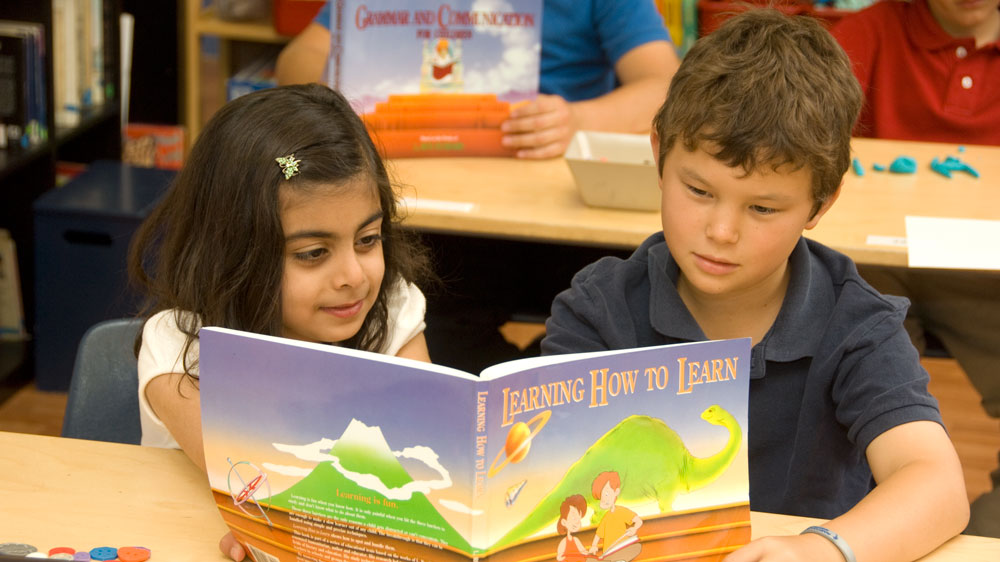
When I began reading Wenger's book, a particular statement stood out to me on the first page of the Introduction: "To assess learning we use tests with which students struggle in one-on-one combat, where knowledge must be demonstrated out of context, and where collaborating is considered cheating" (Wenger, 1999, p. 3). As a recent Elementary teacher graduate this sentence hit me hard. Will I consider collaboration to be cheating? It never occured to me until now that collaboration should be included in student testing. Classroom management is a major focus in teaching practices. Finding ways to "manage" a class is often about using techniques to have students become silent and listen for instruction. Classroom management is imperative and needed for effective classrooms. Teachers can't have their students talking non-stop all day. There needs to be a balance of student collaboration and quieter moments to listen to instruction. Considering that students learn through shared experiences, why is testing always done individually? Is there a way to test students collectively (other than for skills such as team work)? Would this form of collective testing disadvantage students whom enter into new classrooms where testing is limited to individual skills? For example, let's suppose I have a grade 3 class with students coming from earlier grade levels with only individual testing of skills. Imagine that I decide to utilize collaborative testing for my grade 3's to assess all the outcomes. When these students arrive in a grade 4 classroom, would they be overwhelmed when confronted with individual testing? Perhaps a balance of the two strategies should be mandatory for testing purposes. Teachers encourage student collaboration for in-class activities, however, it is not a common method for testing curriculum outcomes.
A change in testing styles needs to come from higher administration to be effective. A handful of classroom teachers doing collaborative testing is not enough to make change. Especially with school demands to have students' test scores increase in two core subjects; Language Arts and Mathematics, it's no wonder that teachers focus so much on individual testing. These standardized tests are completely based on individual ability, and are ONLY offered as independent examinations. When EEMLA (Early Elementary Mathematical Literacy Assessment) tests are passed out to grade 3 students, silence fills the room for this standardized independent testing. Similar testing is conducted with students in grades 6, 9, and 12. With test scores revealing which schools are ranked the highest for achievement, schools with the lowest scores are under significant pressure to get higher scores. This results in teachers preparing students for standardized tests with practice tests weeks before provincial testing. Thus testing the individual for learning appears to fit into this system.
Collaboration seems like an obvious tool for learning, and thus should be utilized more in testing for learning. When we enter the workforce we are constantly faced with learning situations in which we are collectively engaged in learning and negotiating meaning. Many careers involve employees participating in work place expectations and deadlines with co-workers. Careers such as police officers, nurses, actors, etc. all involve collaboration with colleagues to implement effective duties and build on expertise. Even careers that have a more independent work style involve some form of collaboration with employers or stake holders. Can you imagine a police officer who didn't participate in collaboration with other officers when attempting to arrest a suspect of a crime? It might look something like this:
Officer Ego get's a call that a bank is being robbed. He thinks he has everything under control. He knows the location to go to, what the culprit is wearing, and has been trained on bank robberies in policing school. Why would he need any assistance? "Aha!" he says, "Perhaps I will be promoted if I take down this bank robber by myself". Officer Ego turns off his radio and decides to enter the bank alone with no backup or consultation with any co-workers. Ever so quietly he slides into the bank like the break dance move "the worm"...
Although this was a silly story, the message is an important one. Whether you are a child or an adult, collaboration is a significant component of learning. Collective contributions to learning experiences include sharing ideas, participation in conversations and meaning negotiation, team reflections, etc.
To close I will encourage you to practice "the worm" independently and with a group of friends. Did you learn more when engaged with friends? Perhaps we can all participate in this dance move during our next class like we learned how to tie a knot! LOL :)
References
Tomasello, M. (1999). The cultural origins of human cognition. Cambridge Mass.: Harvard
University Press.
Picture # 1: http://www.appliedscholastics.org/Youtube video: http://www.youtube.com/watch?feature=player_detailpage&v=HvLgfR7-QN4

Natalie,
ReplyDeleteI enjoyed your talk about whether or not collaboration is considered cheating in educational settings. Although I do recognize that children are more easily distracted by older adults, I definitely see the benefit in having kids work together in order to learn new ideas and concepts.
A huge reason why I cannot deny these benefits is the simple fact that were are, by nature, social beings. We learn largely through observation and interaction of our peers, and thus learning alone seems to be completely counter-intuitive.
I hope- for the sake of my future children- that methods will be developed that will make collaborative learning for children all the more possible for all ages.
Mau